

A decentralized application, or DApp for short, is a software application that runs on a distributed network. A DApp has a similar system to any other software application, such as a mobile or desktop application, but runs on P2P (peer-to-peer) blockchain networks instead of a centralized network. The single most important difference is that a DApp is not connected to a centralized system. Thanks to its distributed structure, DApps provide a transparent, decentralized and secure service environment against cyber attacks.
Common features of DApps are as follows:
1. Open Source
A DApp must have an independent management system and be self-executing without the need for an intermediary. All changes must be unanimously adopted. A DApp’s code must be publicly available for review.
2. Decentralization
All operational records of a DApp must be stored cryptographically on a public, transparent, and decentralized blockchain.
3. Promotion
Validators can be rewarded with tokens to ensure that they continue to work effectively.
What Is the Difference Between Centralized and Decentralized Applications?
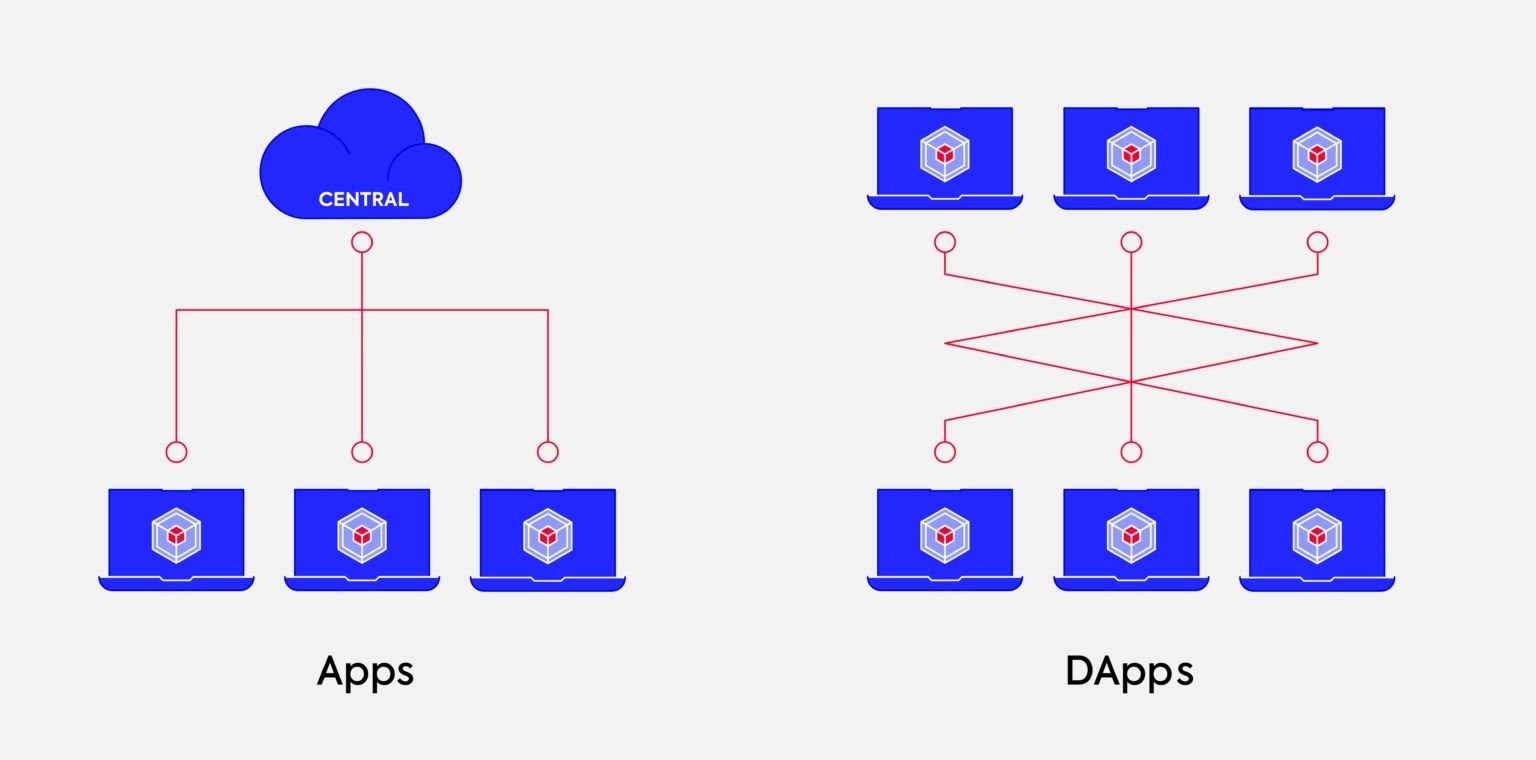
Centralized apps are owned and managed by one or more firms, while DApps run on the blockchain and allow users to transact directly with each other without the need for an intermediary.
Decentralized apps can be developed for use in various industries. For example, DApps can be built for social networks and games and used for entertainment or productivity. Many dApps are developed as tools to help users to access decentralized finance (DeFi) services.
The image below shows the structure of centralized and decentralized applications.
The Advantages of Decentralized Apps
Decentralization: Since Dapps are not owned or controlled by a single authority, the cons and weaknesses of central systems are eliminated.
Open Source: This feature encourages the development of the DApp ecosystem. Developers can build applications that bring more benefits thanks to the broad collaboration opportunities in the blockchain community. Anyone can review open source projects and leverage related technologies to create new projects.
Automatic Incentives: Rewards and commissions can be given to validators in the network for their work. Thus, users who are responsible for protecting the network and creating blocks can earn certain amounts of income in return for their efforts.
Transparency: Decisions are made by consensu


