

The concept of cryptocurrency mining emerged with the introduction of Bitcoin. The concept consists of decrypting encrypted blocks created on the network with special devices, confirming these transactions, processing and recording them on the blockchain, and earning rewards. On the blockchain, transactions usually take place as follows:
-
When a transfer transaction is made, it is first added to a transaction pool where transactions are collected.
-
The miners then combine these transactions and create a block, which is resolved by thousands of miners in a very short time and confirmed if consensus is reached.
-
Once confirmed, they are processed into the blockchain, and the first miner to solve the problem correctly receives the block reward and transaction fee.
Miners incur some costs to perform all these operations. Since Bitcoin works with the Proof of Work consensus mechanism, powerful mining devices are required. Thus, miners need powerful hardware. Regularly upgrading and renewing hardware and the energy consumed by mining equipment are mining expenses. From time to time, miners change their “HODL” positions and start selling Bitcoins they have mined to cover these expenses. Another situation when miners start selling is when they think the Bitcoin price has reached its saturation point. Like any investor, miners want to sell their Bitcoins at the best price possible. Thus, there are changes in the positions of the miners when a decline is expected or when it is thought that the price has reached saturation. And the Bitcoin Miners’ Position Index (MPI) is the index where we can track the positions and trading status of miners.
The MPI is calculated by dividing all miners’ outflow in USD by their 365-day moving average. The formula is as follows:

The MPI assumes that many miners turn to trading platforms to sell. With this assumption, it tries to explain the selling behavior of miners by comparing them with their historical averages. Another assumption is that miners are professionals and are good at determining the timing of the trade. Therefore, the MPI is an important indicator for determining exit points by providing information about miner behavior.
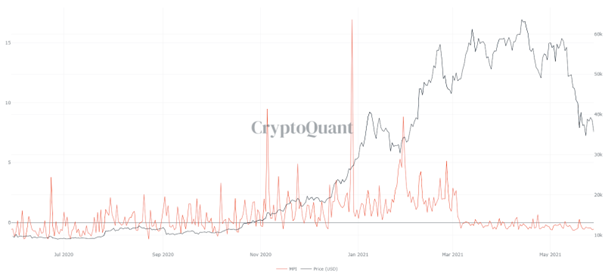
The graph above shows the Bitcoin MPI over the past year. The graph shows the MPI in red and the Bitcoin price in black. According to the Bitcoin MPI, miners tuırn to a sell position when the MPI rises above 2. Examining the graph, we understand that most of the miner sales in Bitcoin ended on March 2, 2020, when the MPI was 2.67 and the Bitcoin price was approximately $50,000. Since then, the Bitcoin price has reached ATH twice, approaching $64,000. The MPI shows as of March 2, there were no major sales and miners did not choose to sell their Bitcoins. As of May 29, the Bitcoin MPI is at -0.5513. In the decline scenario that took place in Bitcoin as of the 2nd week of May, it is seen in the MPI index that there are no miner sales.


